
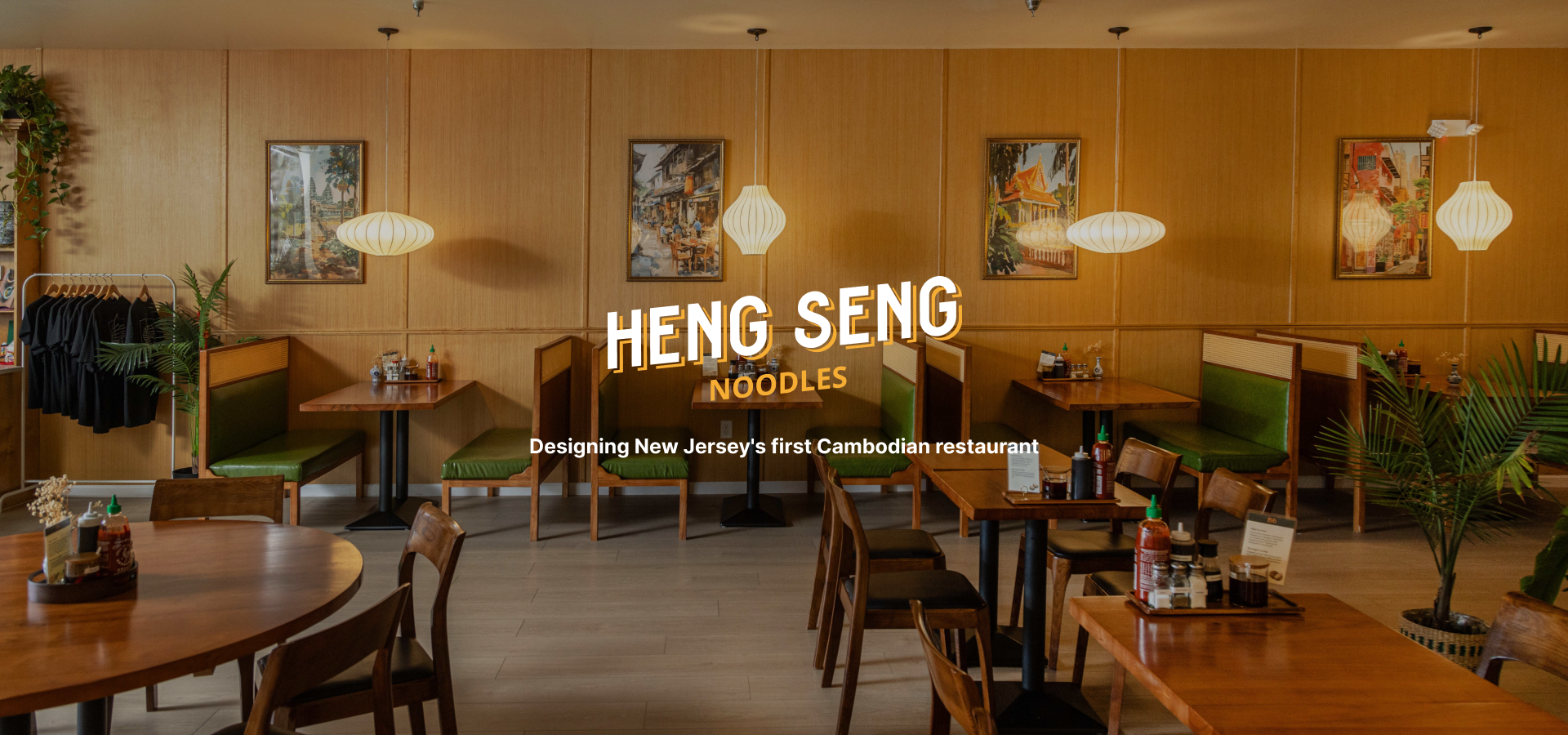
Project Overview
Timeline
Sept 2024 - May 2025
Role
Founder • Product Designer • Brand Designer
UX Research • Branding • Responsive Web Design • Menu Design • Service Design • Customer Experience • Operations
Responsibilities
Tools
Figma • Framer • Pinterest • Behance
The Story
Opening a restaurant isn't just about serving great food—it's about creating an experience people remember.
When my family decided to open Heng Seng Noodles, we had one goal: introduce Cambodian cuisine to people who had never experienced it before while preserving recipes that had been passed down for over 30 years.
Unlike established cuisines such as ramen or pho, Cambodian food isn't widely recognized in the United States. That meant every interaction—from discovering the restaurant online to reading the menu and walking through the front door—had to make customers feel comfortable trying something unfamiliar.
Rather than treating branding, interior design, and digital design as separate projects, I approached them as one connected customer experience.

The Challenge
Most customers had never heard of Phnom Penh noodles.
Many wouldn't know:
what Cambodian food tastes like
what dishes to order
how it differs from Thai or Vietnamese cuisine
If the experience felt confusing or intimidating, people might never come inside.
The challenge became:
How might we introduce an unfamiliar cuisine through thoughtful design while maintaining authenticity?
Before designing anything, I wanted to understand both the market and the people we were designing for. I researched local restaurants throughout South Jersey, studied customer reviews, and visited competing businesses to identify common frustrations.
Customers appreciated restaurants that felt warm and authentic but became frustrated when they encountered:
difficult-to-read menus
inconsistent branding
cluttered dining spaces
confusing websites
limited mobile accessibility
I also researched Cherry Hill's demographics and nearby businesses. Being located next to Hung Vuong Food Market meant many visitors were already interested in Asian cuisine, but many had little or no experience with Cambodian food.
Understanding Our Customers
Instead of focusing only on business goals, I established experience goals.
The restaurant should:
feel welcoming before customers even entered
communicate authenticity without feeling intimidating
simplify ordering for first-time visitors
create a consistent experience across physical and digital touchpoints
encourage repeat visits through memorable branding
Defining Success
Before opening Figma, I spent weeks collecting inspiration.
I explored hundreds of restaurants across Pinterest, Behance, and hospitality websites to understand how successful Asian restaurants balanced tradition with modern design.
I saved examples of:
interior spaces
typography
restaurant websites
menus
photography
color palettes
signage
Research & Inspiration
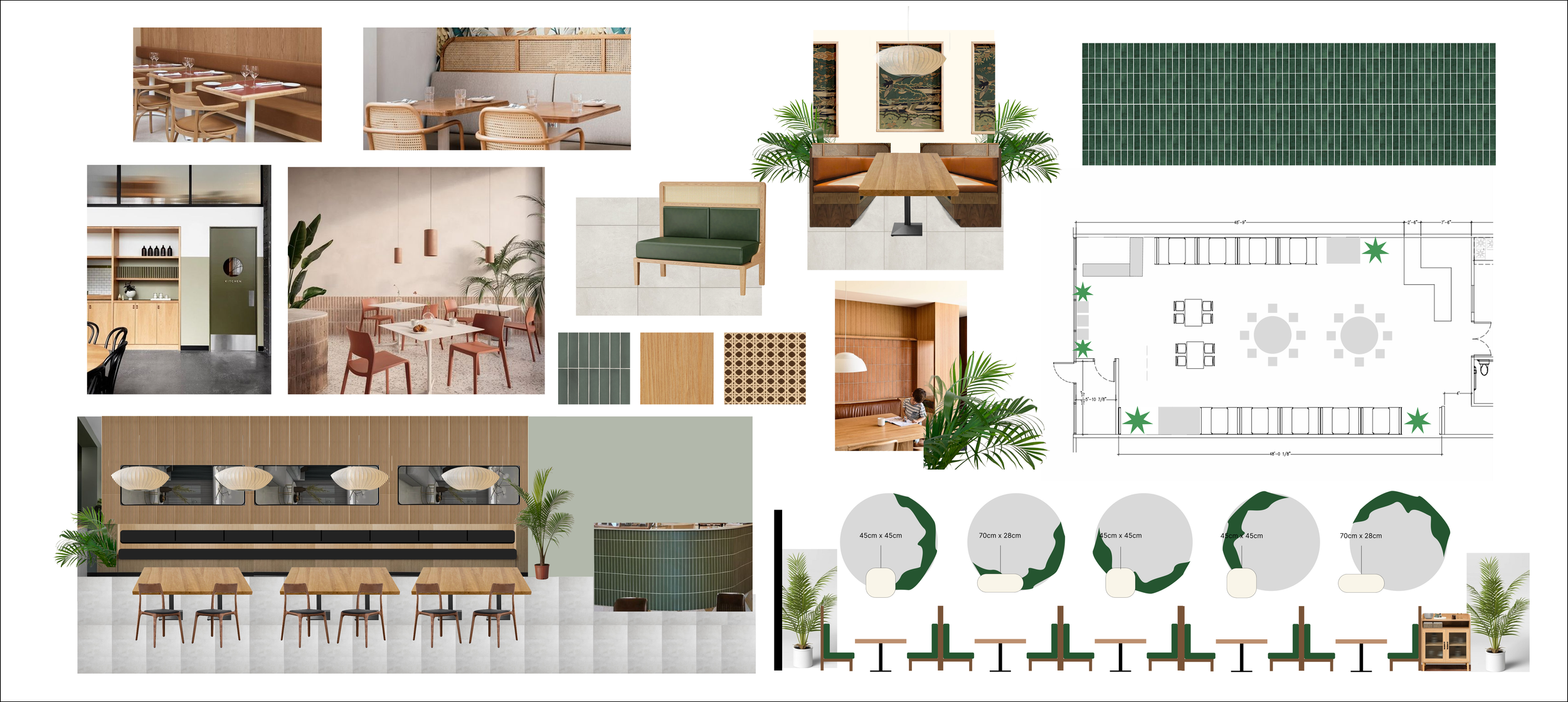
With a clear visual direction established, I began creating Heng Seng Noodles’ identity. The brand needed to feel authentic without relying on stereotypes.
I developed:
logo
color palette
typography
visual guidelines
Green became the primary brand color because it reflected freshness while complementing the natural wood materials used throughout the restaurant.
Gold/ Yellow became the secondary brand color to reflect the abundance of gold in Cambodia, which can be seen through jewelry and traditional clothing.
Every design decision was intended to create consistency across signage, menus, digital experiences, and the physical restaurant.
Building the Brand
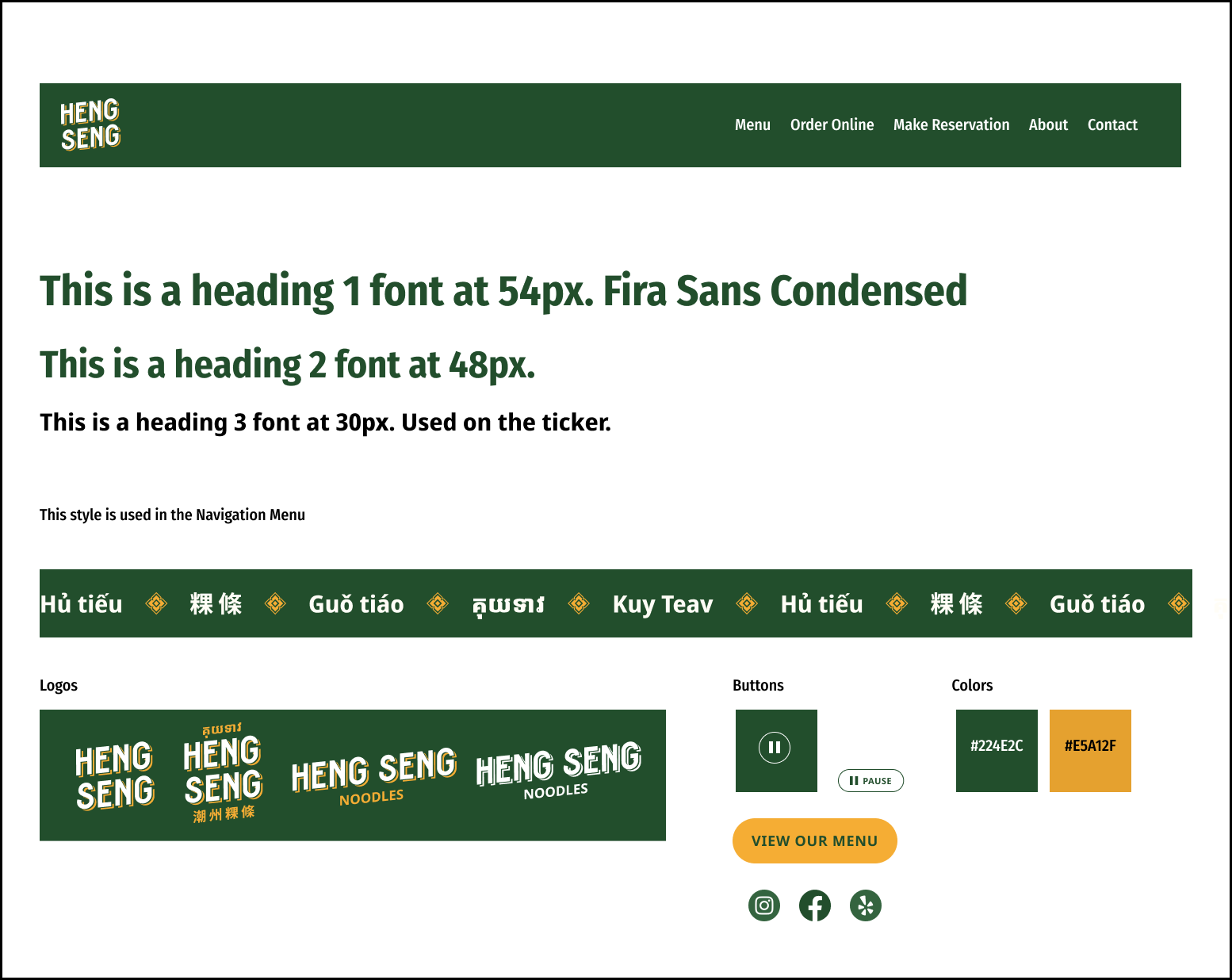
The restaurant itself became one of the most important parts of the customer journey. Rather than decorating the space after construction, I treated the environment as another interface.
Natural Materials
Wood furnishings and indoor plants created a calm environment inspired by Southeast Asia while making the restaurant feel warm and approachable.
Seating Layout
The dining room was arranged to balance customer comfort with efficient staff movement during busy service. It was also intentional to have large tables for families to follow the values of eating family-style and create memories at the table.
Designing the Restaurant Experience
The website became the restaurant's first impression. Many customers would discover Heng Seng Noodles through Google before ever visiting.
The website needed to answer three questions quickly.
What is Cambodian food?
What should I order?
How do I visit or place an order?
I designed responsive layouts that prioritized:
easy navigation
readable menus
clear calls-to-action
mobile accessibility
Rather than overwhelming visitors with long blocks of text, I used photography and visual hierarchy to guide users naturally through the experience.
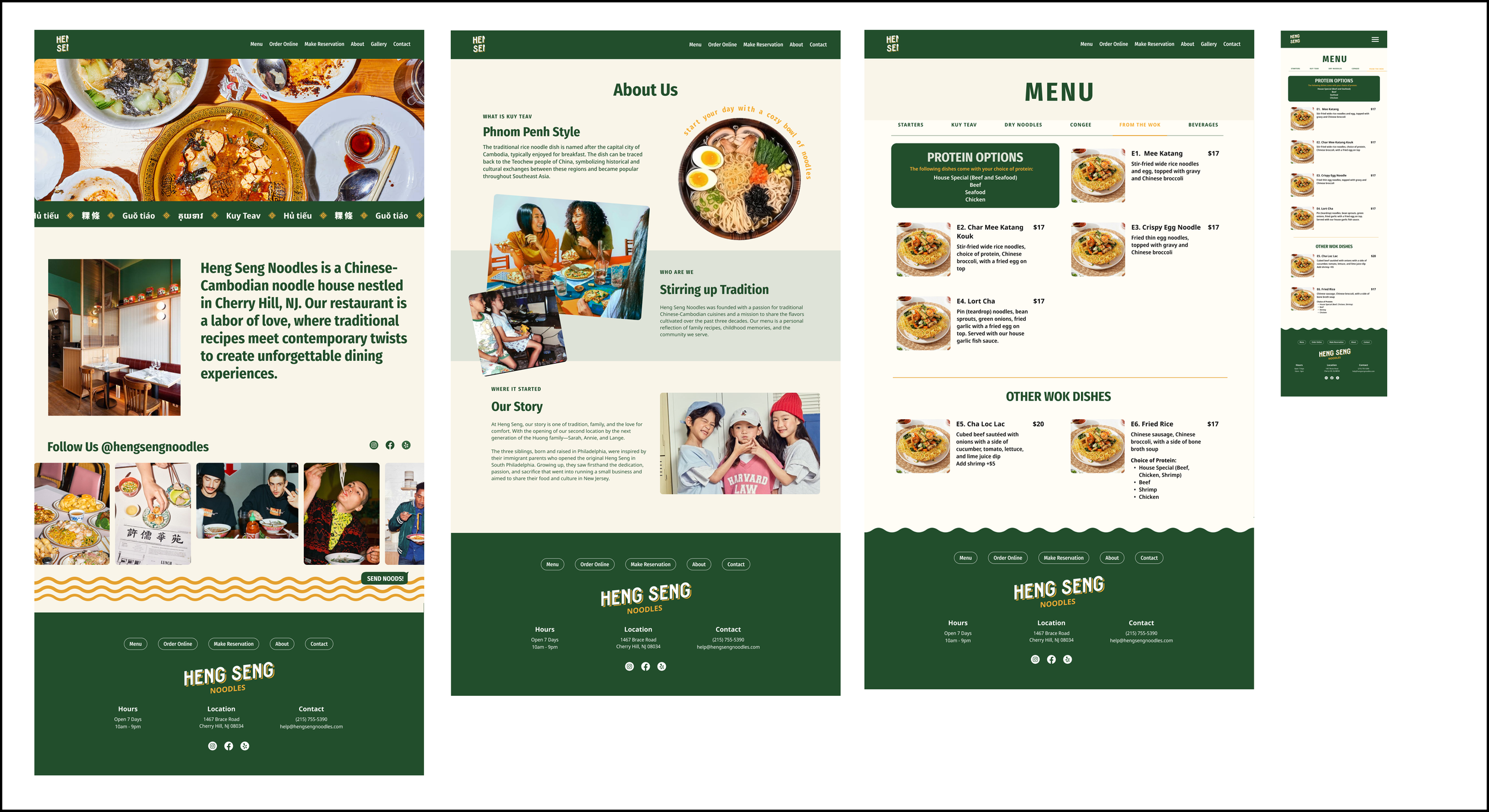
For many customers, the menu would determine whether they felt confident placing an order.
Instead of listing dishes without structure, I organized the menu into clear categories that reduced cognitive load and made browsing easier.
Typography, spacing, and hierarchy were refined to improve readability while maintaining consistency with the overall brand.
The result was a menu that educated customers instead of overwhelming them.
Designing the Digital Experience

AI became a collaborative tool throughout the project. Instead of using it to make design decisions for me, I used it to accelerate research, explore ideas, and iterate more efficiently.
Using AI Throughout the Process
Recipe Development
Creating the menu followed the same iterative process.
I researched traditional Cambodian dishes, developed my own variations, cooked each recipe, and tasted every version. After each round of testing, I used AI to help identify ingredient adjustments when flavors felt too salty, sweet, or unbalanced.
Rather than accepting suggestions automatically, I treated them as hypotheses and validated every change through additional cooking and taste testing. Once recipes were finalized, AI helped scale ingredient quantities from home-sized recipes to restaurant production while maintaining consistency.
This process allowed me to iterate faster while keeping every final decision grounded in real-world testing.
By opening day on May 2025, the project had grown far beyond a restaurant idea.
The final experience included:
Brand identity
Restaurant interior
Responsive website
Digital menu
Physical menu
Photography direction
Customer journey
Marketing materials
Every touchpoint was intentionally designed to create one cohesive experience.
Launch
Designing Heng Seng Noodles changed the way I think about product design. I learned that meaningful experiences don't begin and end with a screen.
Whether designing a restaurant, a website, or a menu, the process remains the same:
Understand people, identify friction, prototype solutions, iterate, and continue improving after launch.
Owning and operating the restaurant also gave me something many design projects cannot—a continuous feedback loop.
Every customer interaction became another opportunity to observe behavior, identify pain points, and make improvements based on real-world use.
That mindset continues to shape how I approach every design problem.
Reflection