
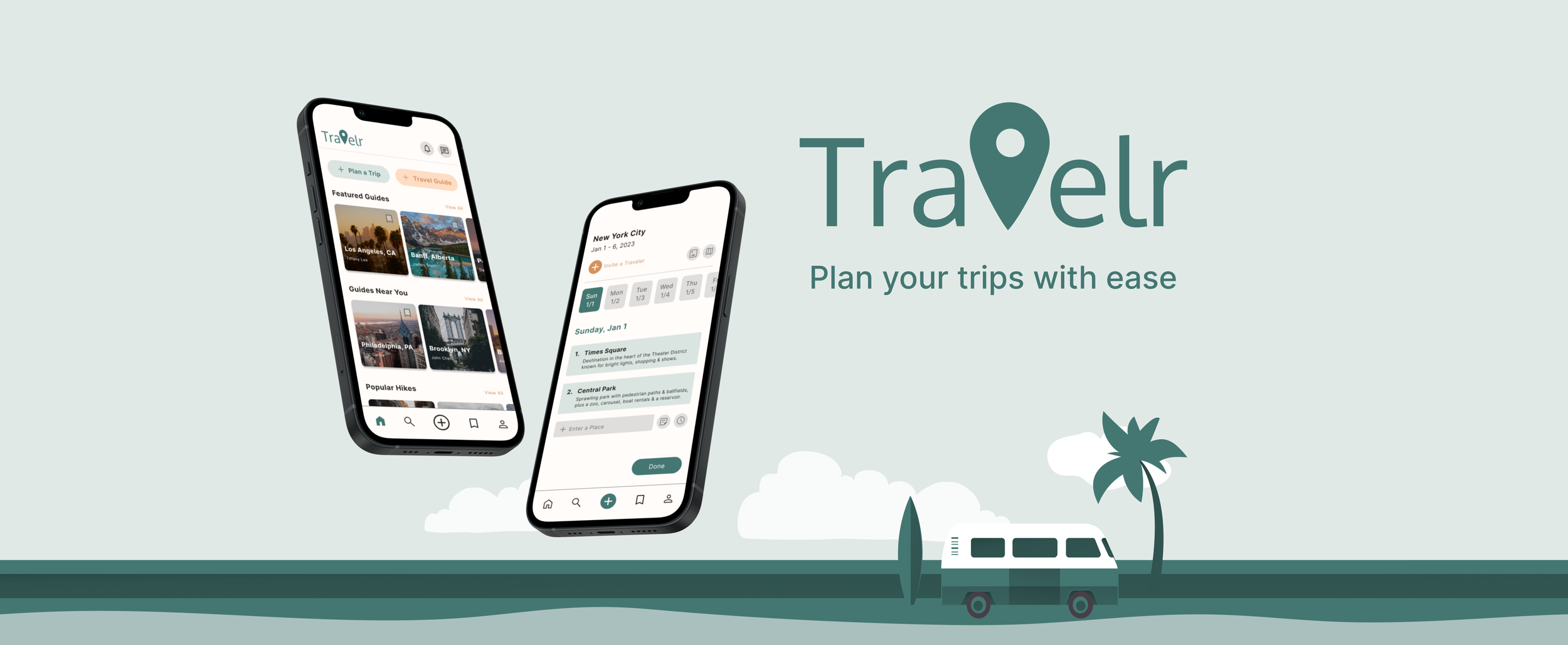
Travelr is a trip planning social platform for users to collaborate and find travel guides from other travelers.
Overview
Traveling is a great way for people to learn about new cultures, take a break from work, and gain new perspectives. However, a poorly planned trip and lack of organization can lead to people dissatisfied. With more young adults are traveling more for the first time, it’s essential to have available resources to help plan a successful trip. Proper planning and organization can make all the difference in having an enjoyable and fulfilling travel experience.
Background
Role
UX/UI Designer
User Research, Wireframing, Visual Design, Prototyping, Usability Testing
Responsibilities
Tools
Figma
Team
Individual
Timeline
Nov 2022 - Jan 2023 (10 Weeks)

How might we help young adults organize travel plans to meet all expectations?
Identify the Problem



Design a travel app to help people plan their itinerary and collaborate with their friends.
The Solution
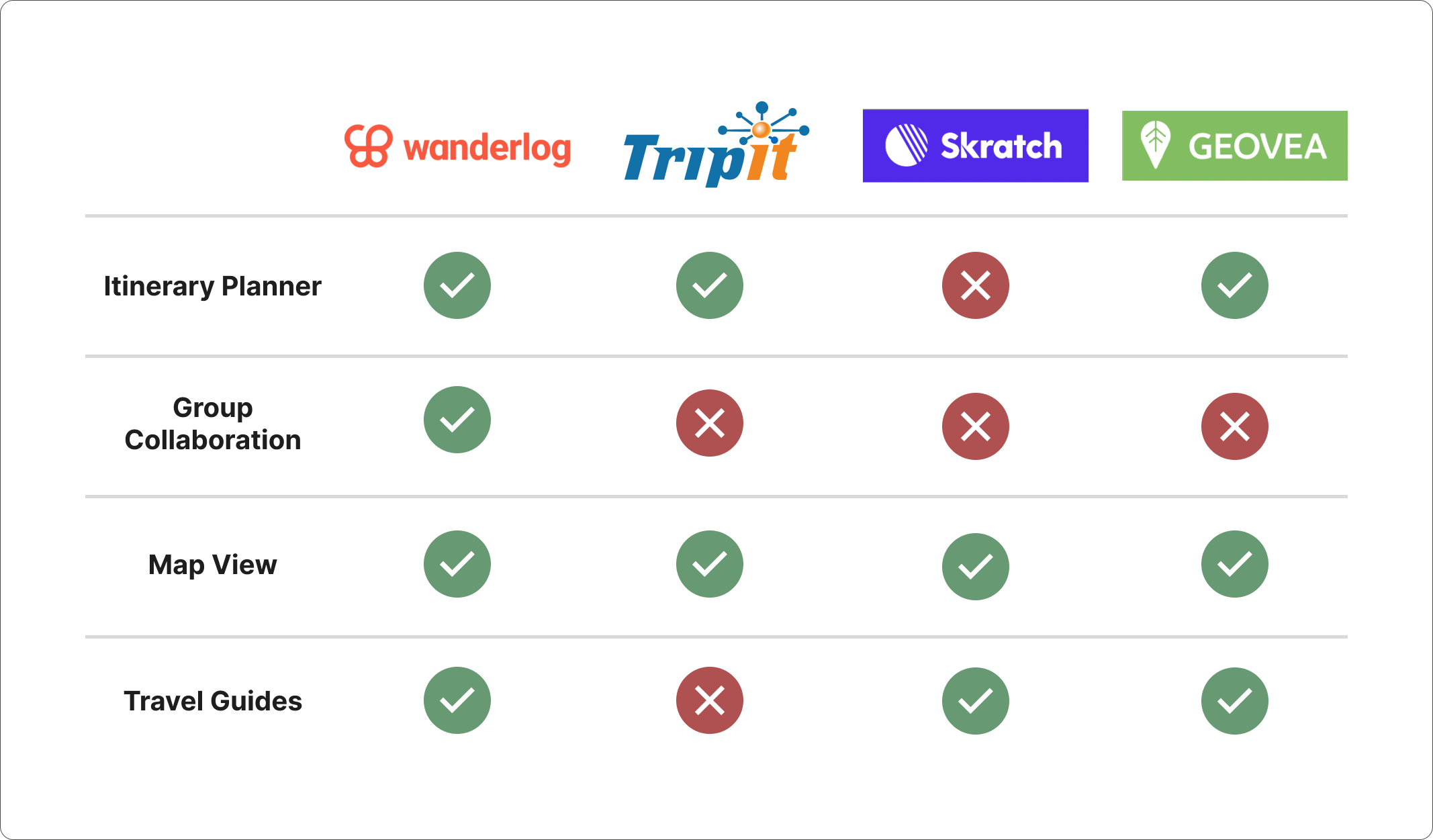
As part of the research process, I have conducted a competitive analysis of the top travel planning platforms on the App Store. By researching and analyzing companies that provide a similar solution, I aim to gain deeper insights into what features and functionalities are most important to our target users. I also conducted user interviews of frequent travelers to better define the solution. These interviews were carefully designed to gather a deep understanding of the travel habits, preferences, and pain points of the target audience.
Understand the Problem
Understand participants’ motivation for taking trips
Identify different planning methods participants take
Define common problems before and during trips
Research Goals:
With the comparison of each travel planner and their common features, 1 out of 4 companies provide group collaboration. Inviting friends on the itinerary can speed up the trip planning process and give everyone the opportunity to add their input. I found that group collaboration an important feature to add to the platform.
Competitive Analysis
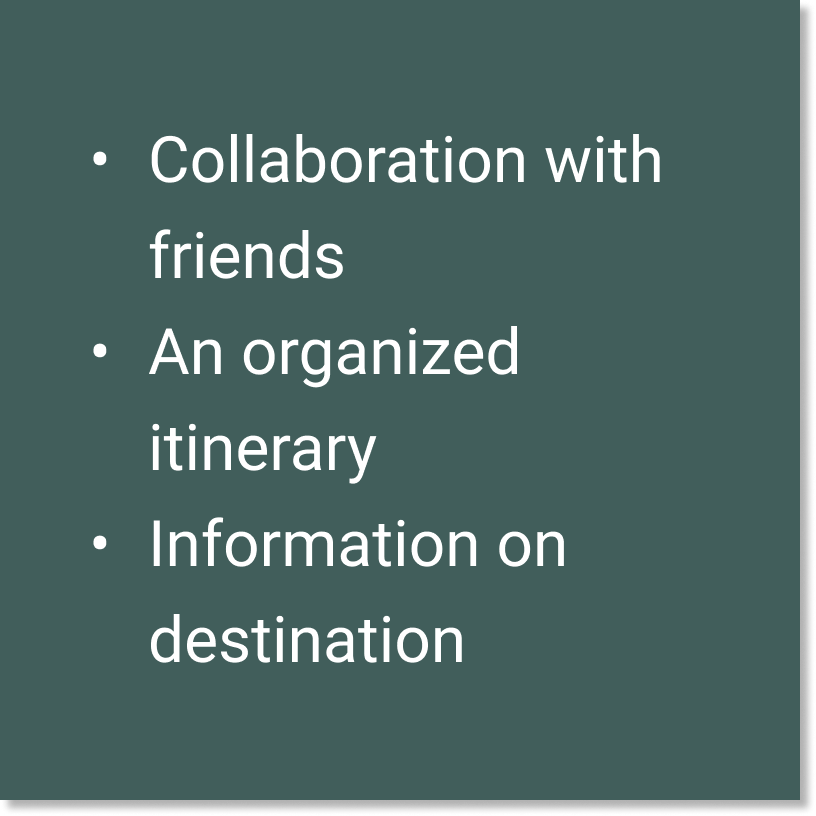
I conducted in-depth interviews with eight participants who travel frequently, aged between 21 and 25 years old. The interviews were conducted through Zoom or in-person and focused on gaining insights into their travel habits, preferences, and pain points.
User Interviews and Findings
"I get excited about being in a new environment. I love trying new foods and experiencing new cultures with my friends."
– Andre, 21
Goals
Motivations
Needs
Pain Points
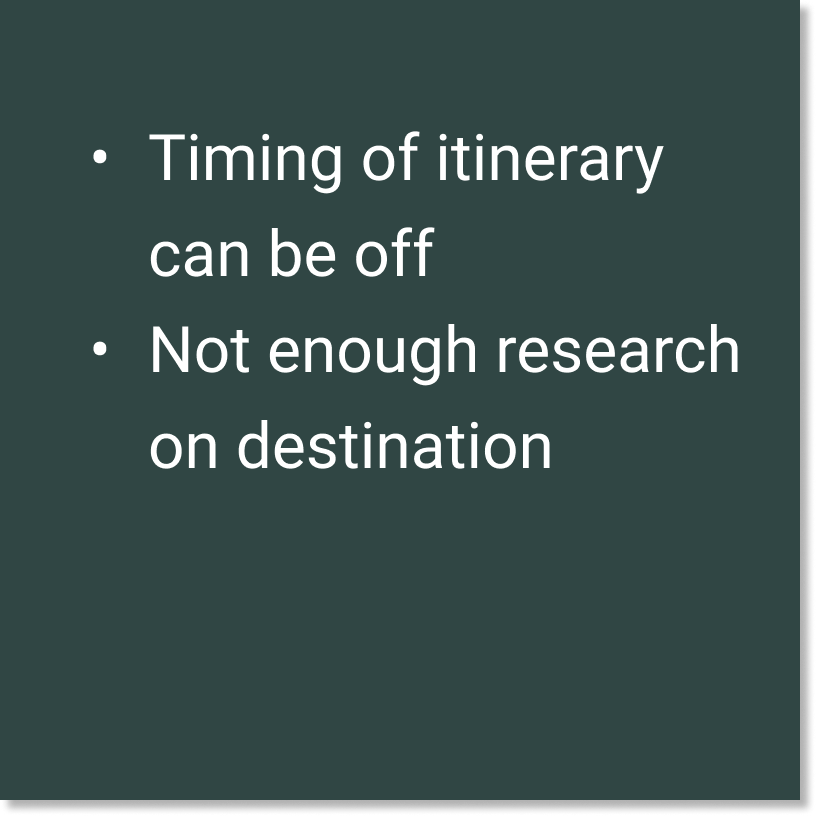
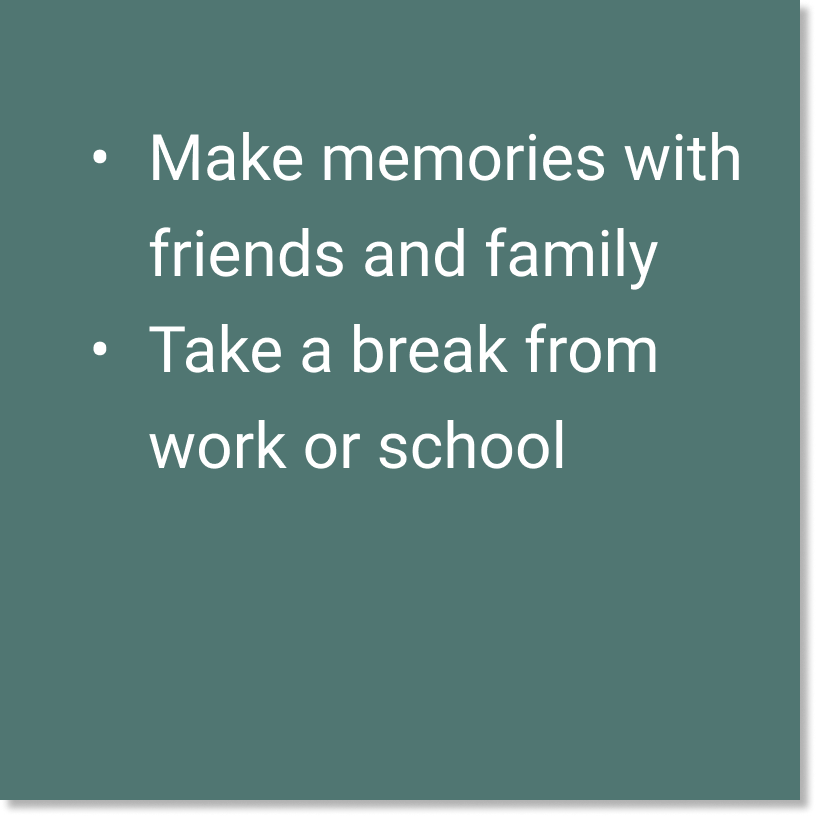
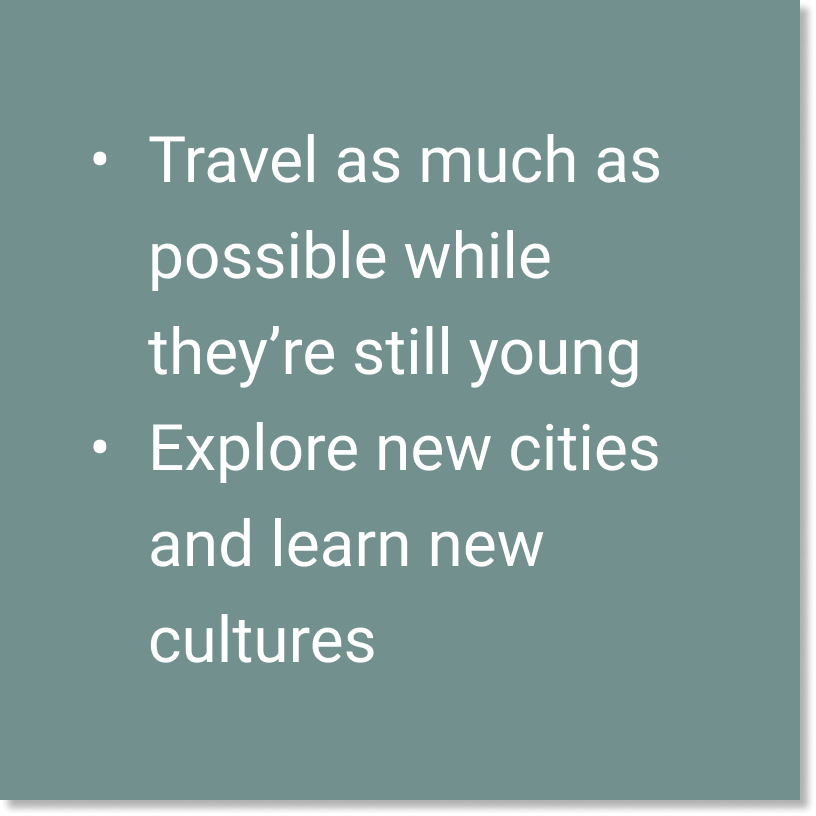
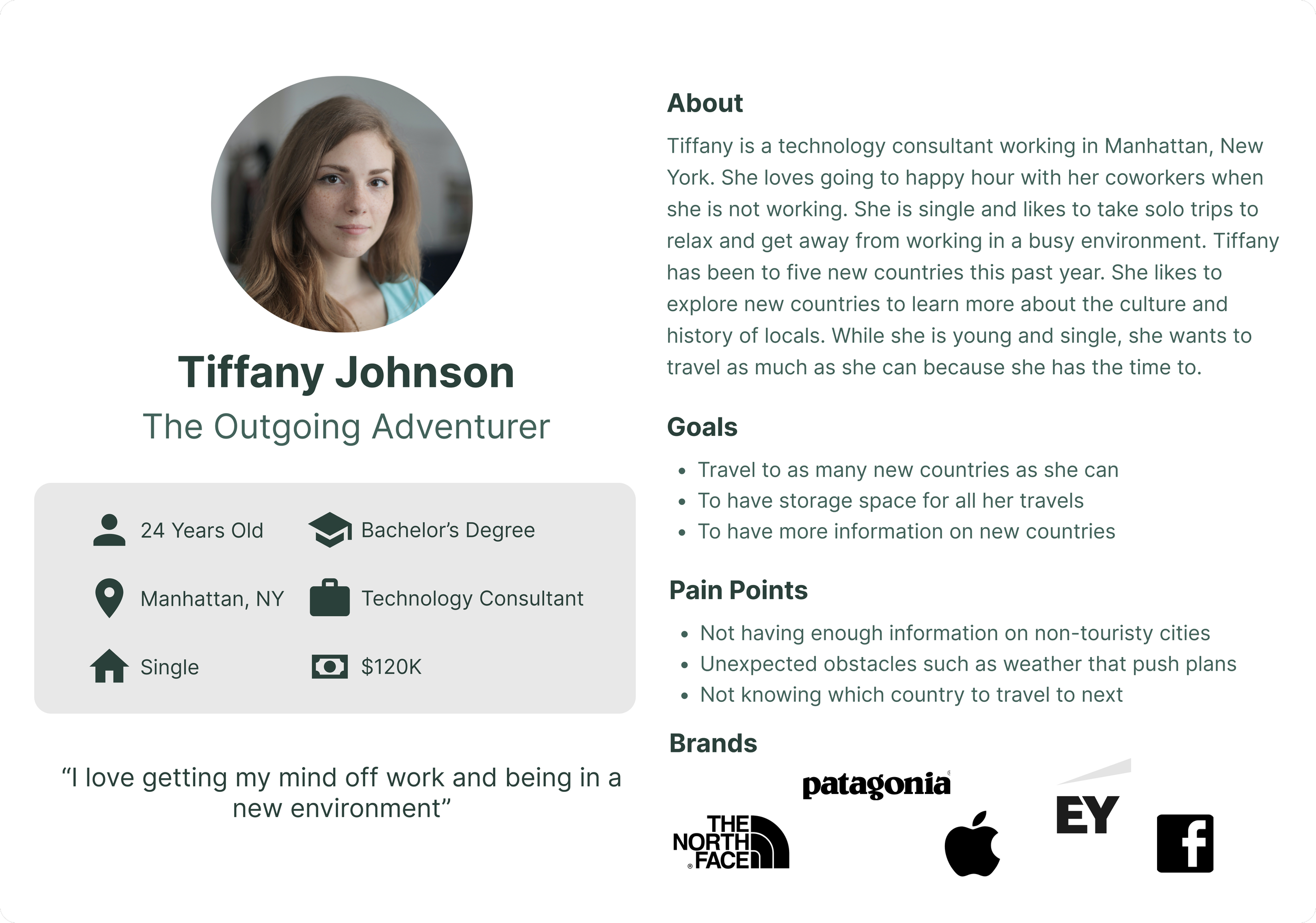
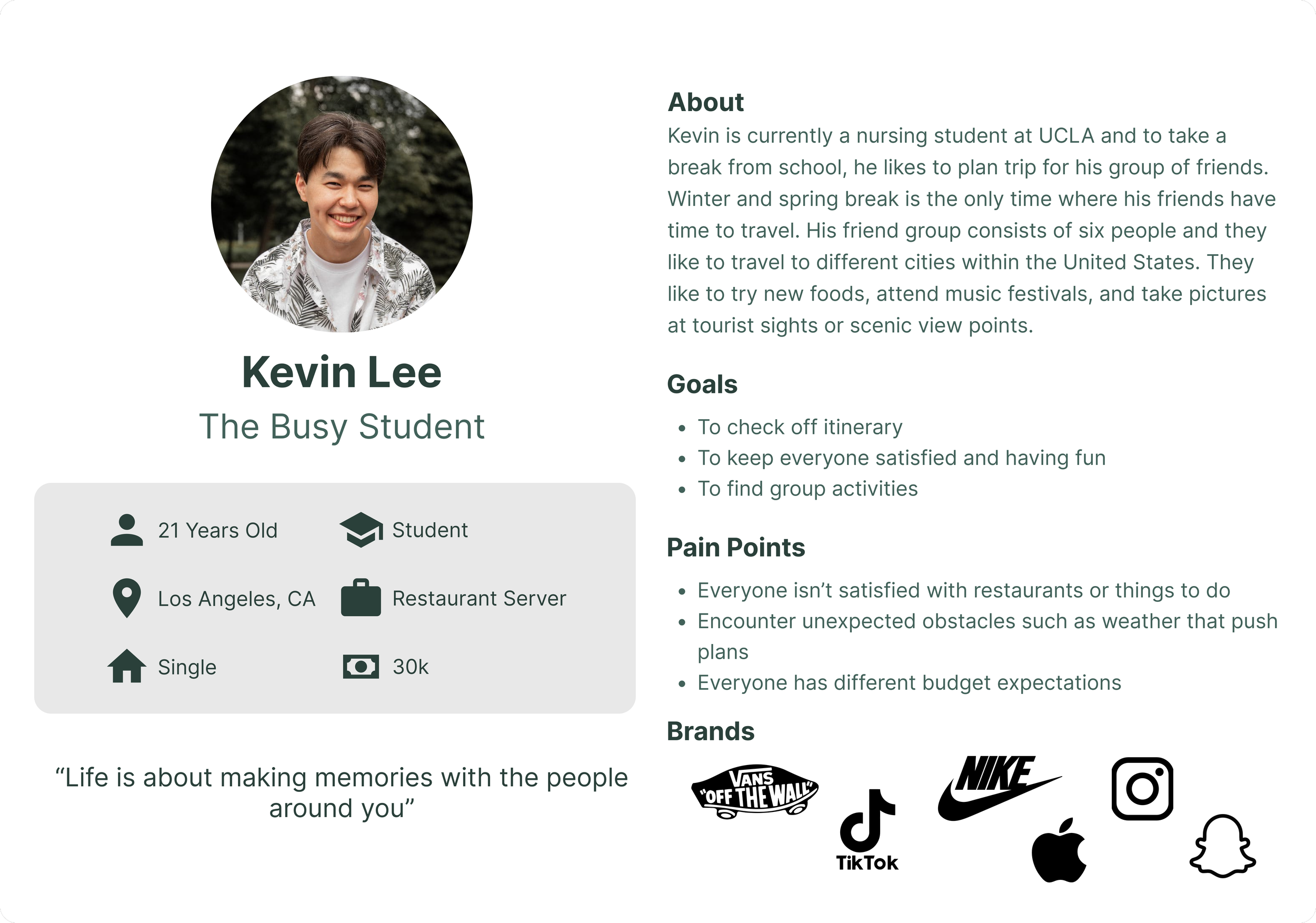
I create 2 personas based on the insight from the user interviews. Tiffany Johnson is a technology consultant who travels to keep her mind off work and to learn new cultures. Kevin Lee is a nursing student at UCLA who take trips with his friends during winter break and spring break to make memories.
Define the Users
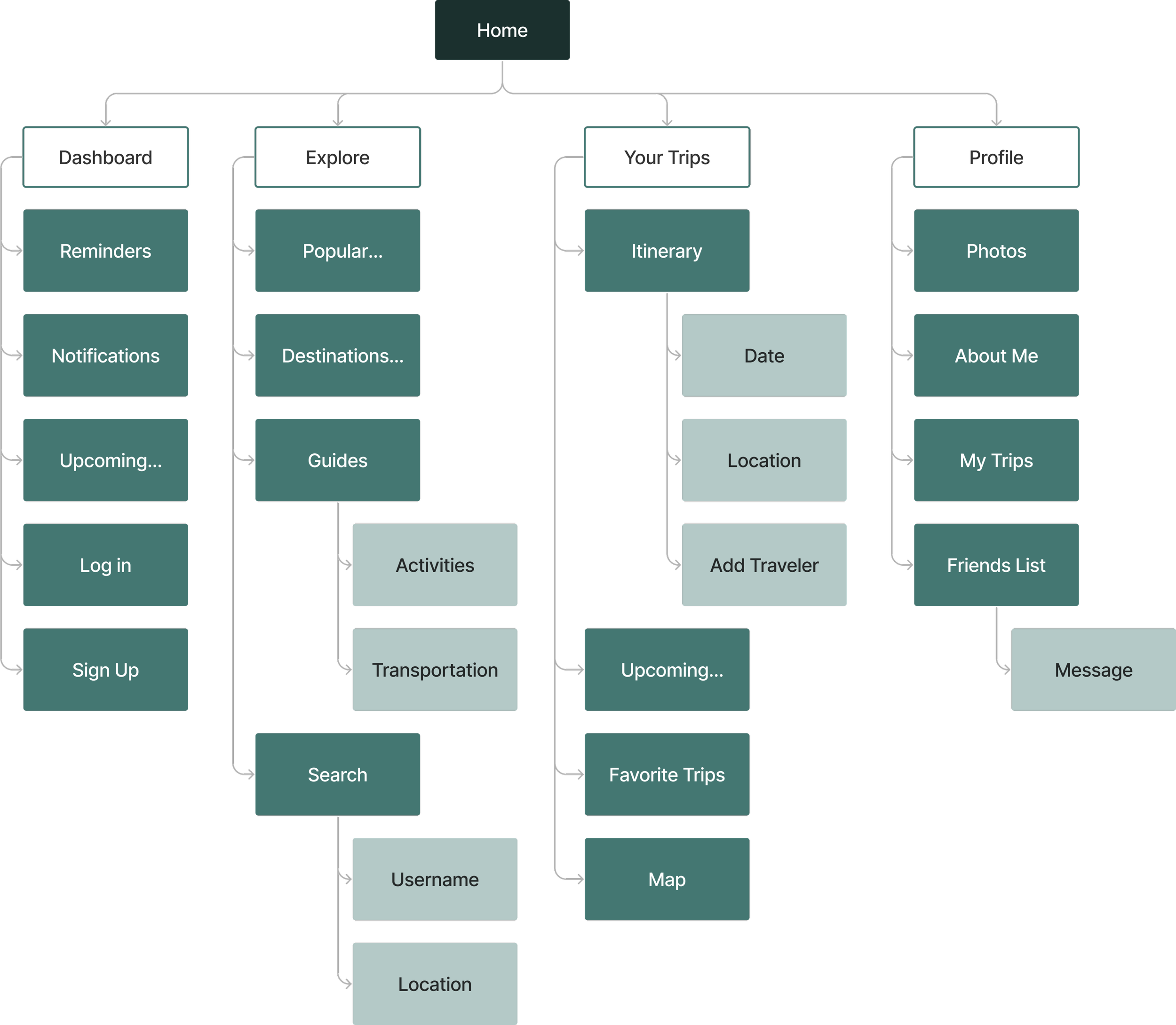
I had conducted a closed card sort with previous participants to understand their mental models of a travel platform. With the data, I was able to create a organization structure to group related content in different pages. This approach ensured that the final product was intuitive and easy to navigate.
Information Architecture
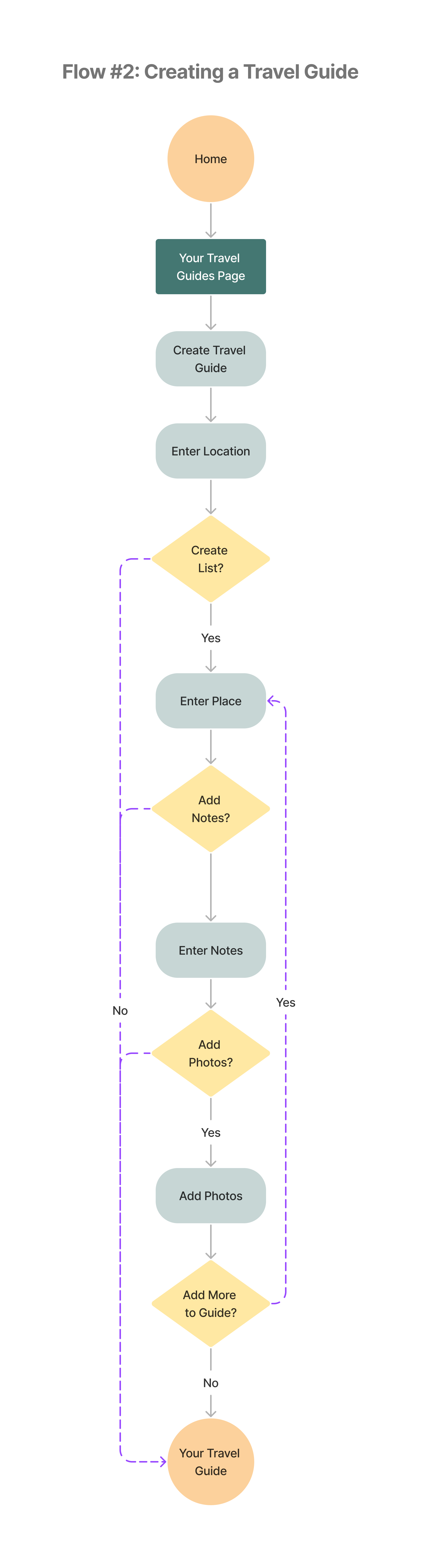
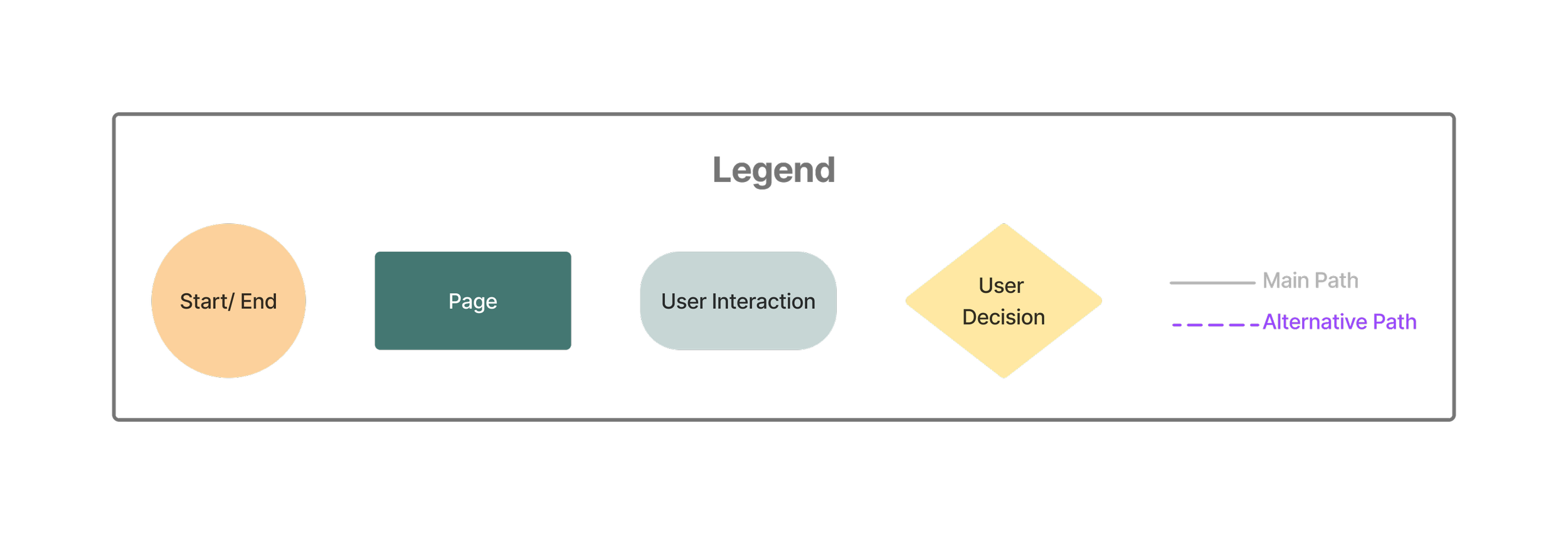
After creating the sitemap, I created the user flow to better understand how our users navigate through the platform and how users can achieve their end goal. The user flow helped me visualize what steps to take before designing a wireframe.
User Flow
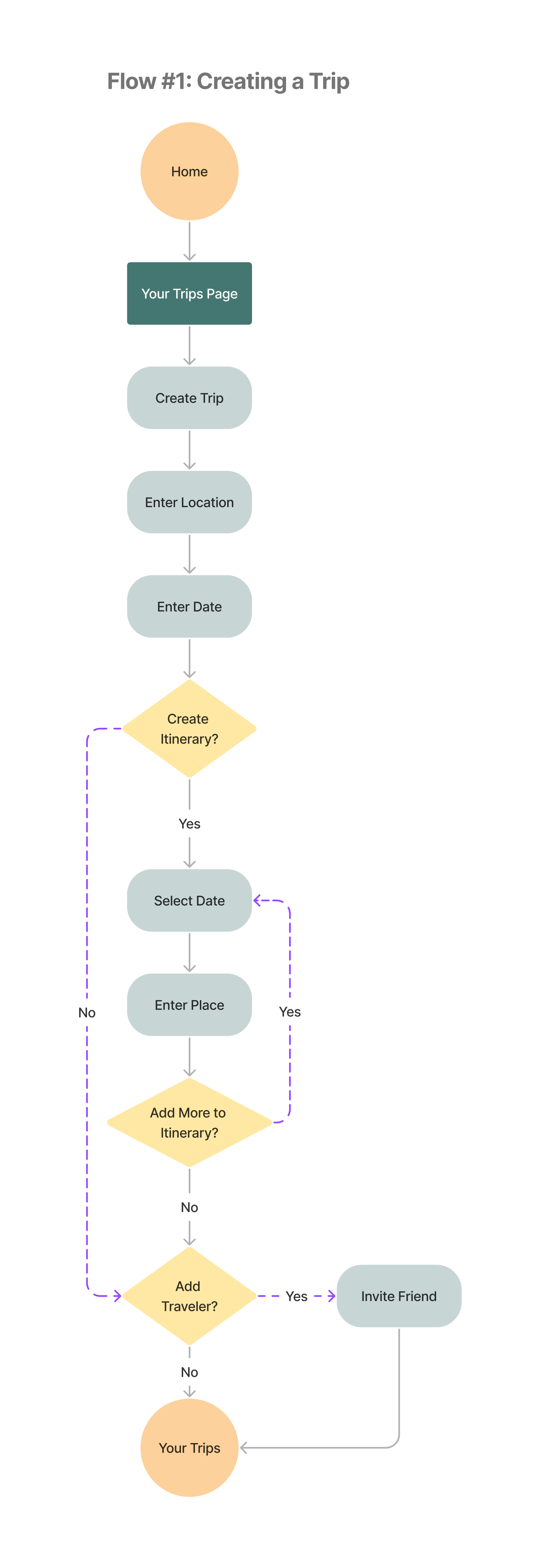
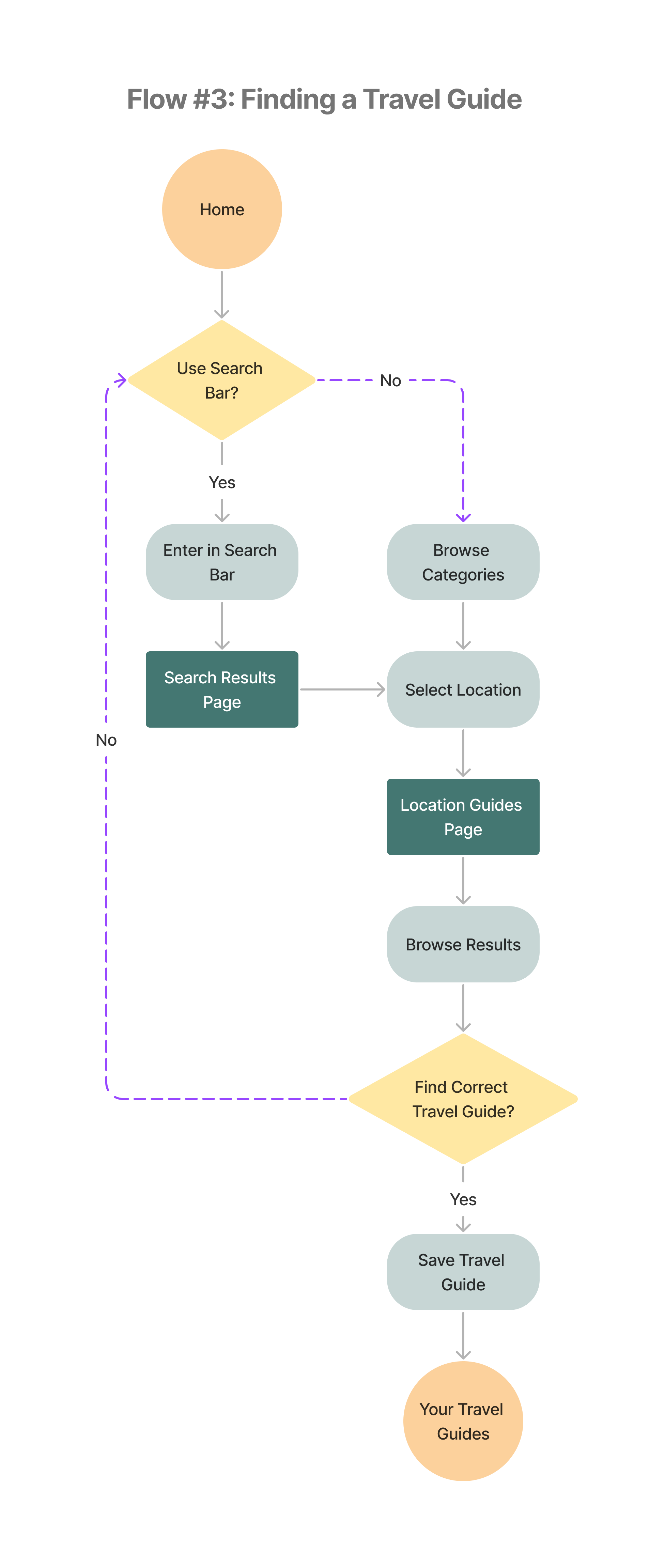

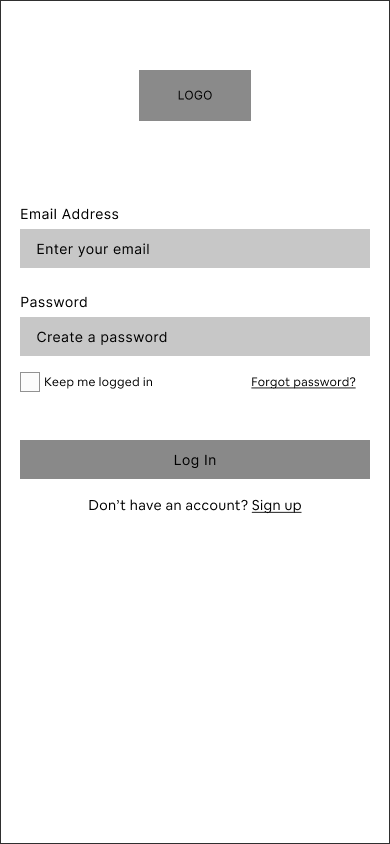
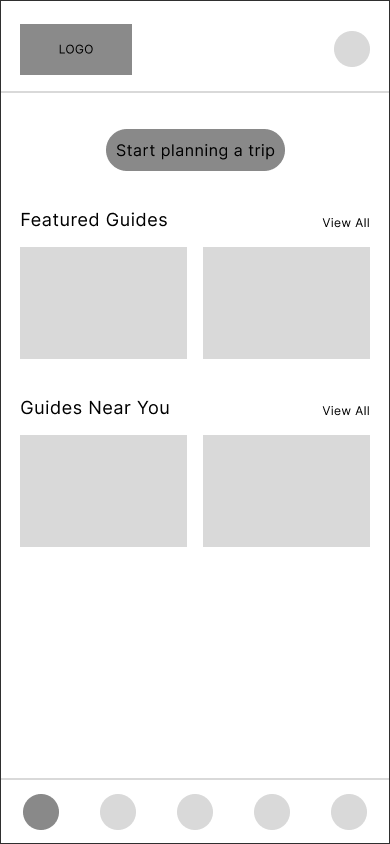
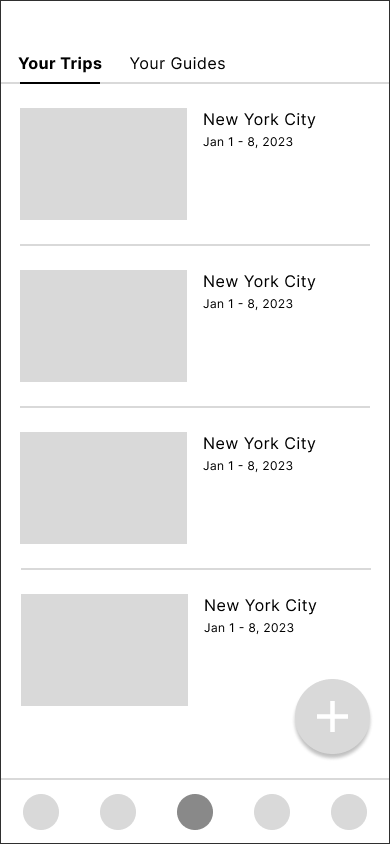
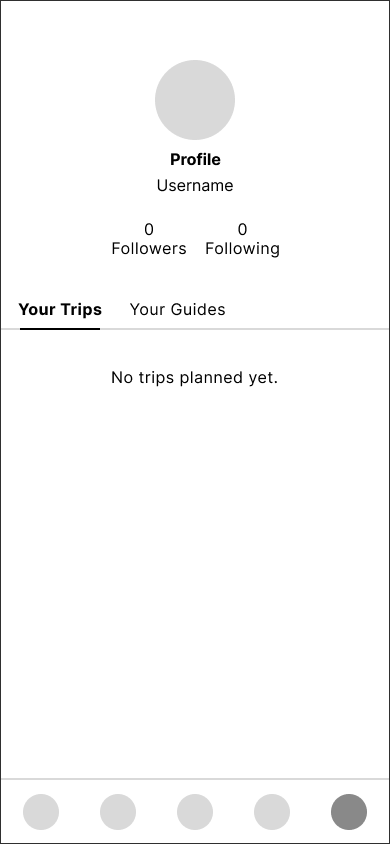
I created a low-fidelity wireframe based on the organizational structure and user flow. This wireframe provided a visual representation of the app's structure and layout, allowing me to identify potential usability issues. The wireframe was kept simple and minimalistic, focusing on the core functionality of the app.
Low-Fidelity to Mid-Fidelity Wireframes
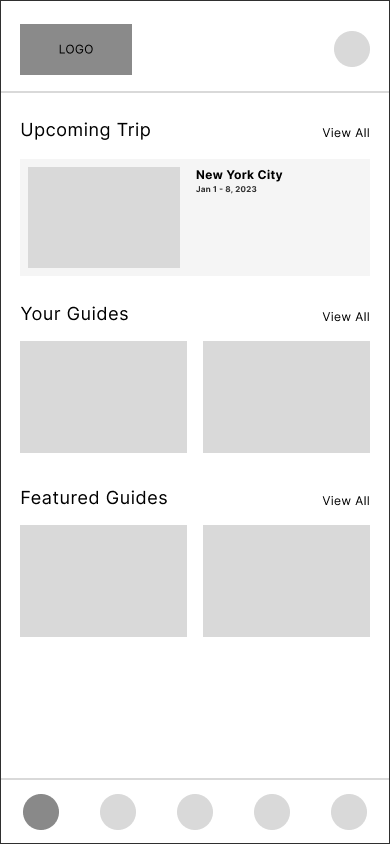
Home Page (Empty State)
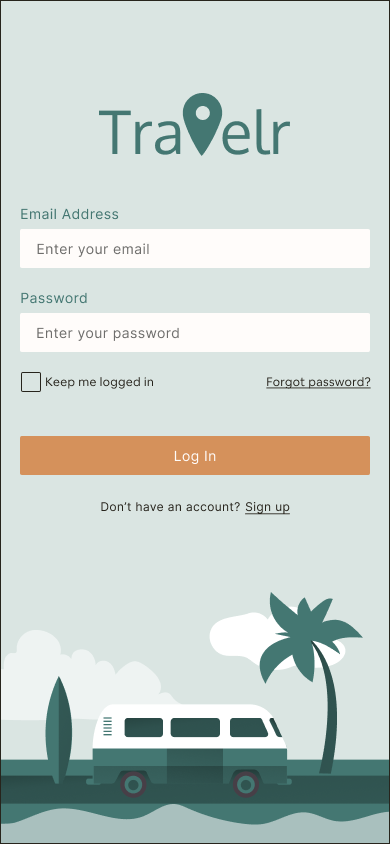
Log In Page
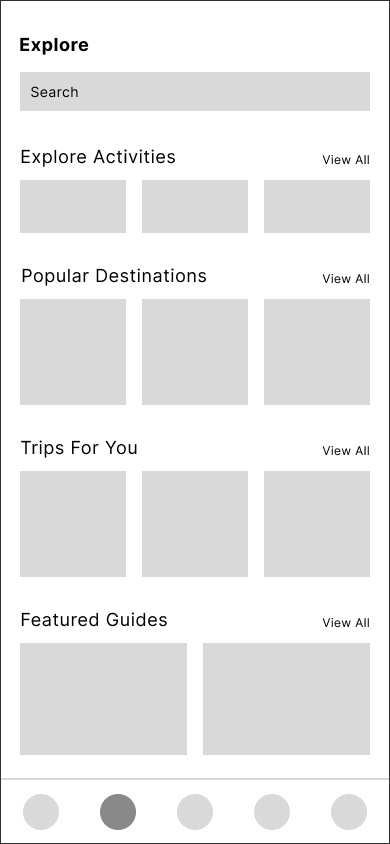
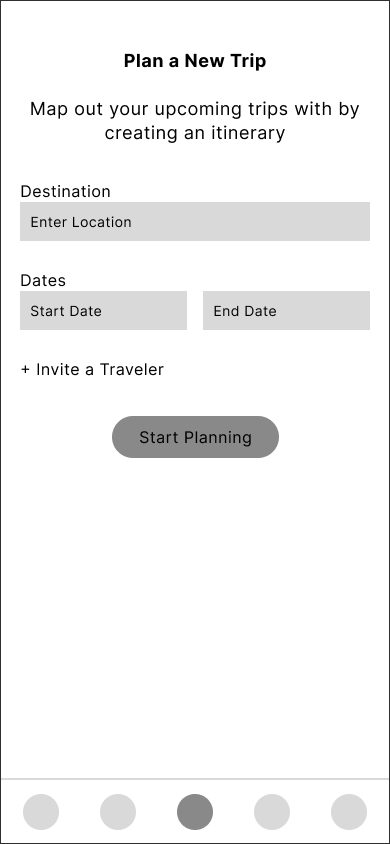
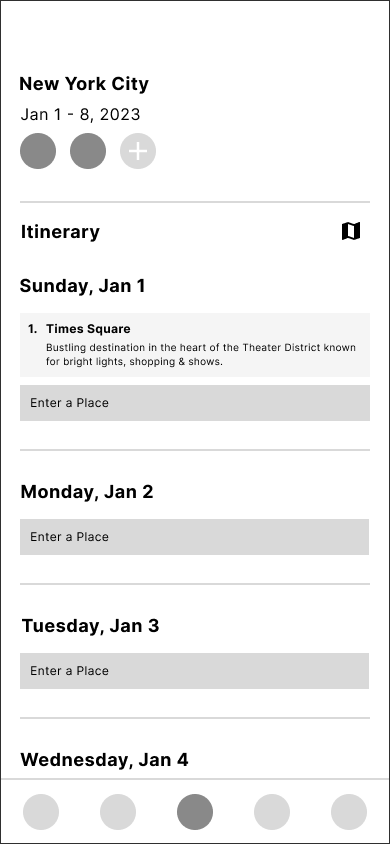
Your Trips/Guides Page
Profile Page
Explore Page
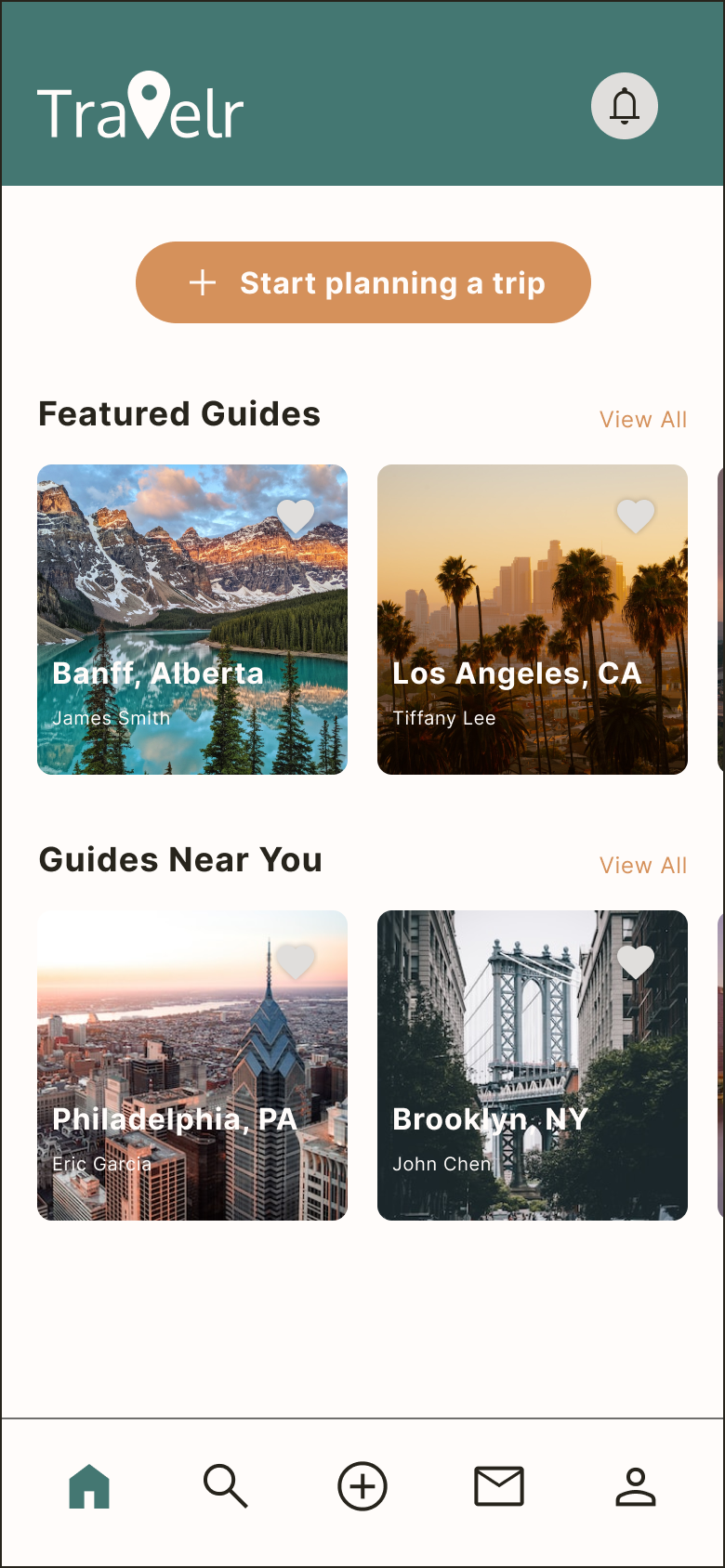
Home Page
Itinerary Page
Create Itinerary Page
The logo for Travelr was designed to include a location pin in place of the letter "v", which represents the user's next destination. Teal and orange were chosen as the brand colors, as they are often associated with the ocean, sky, sunsets, and warm destinations. The use of these bright colors evokes feelings of adventure and excitement.
Branding
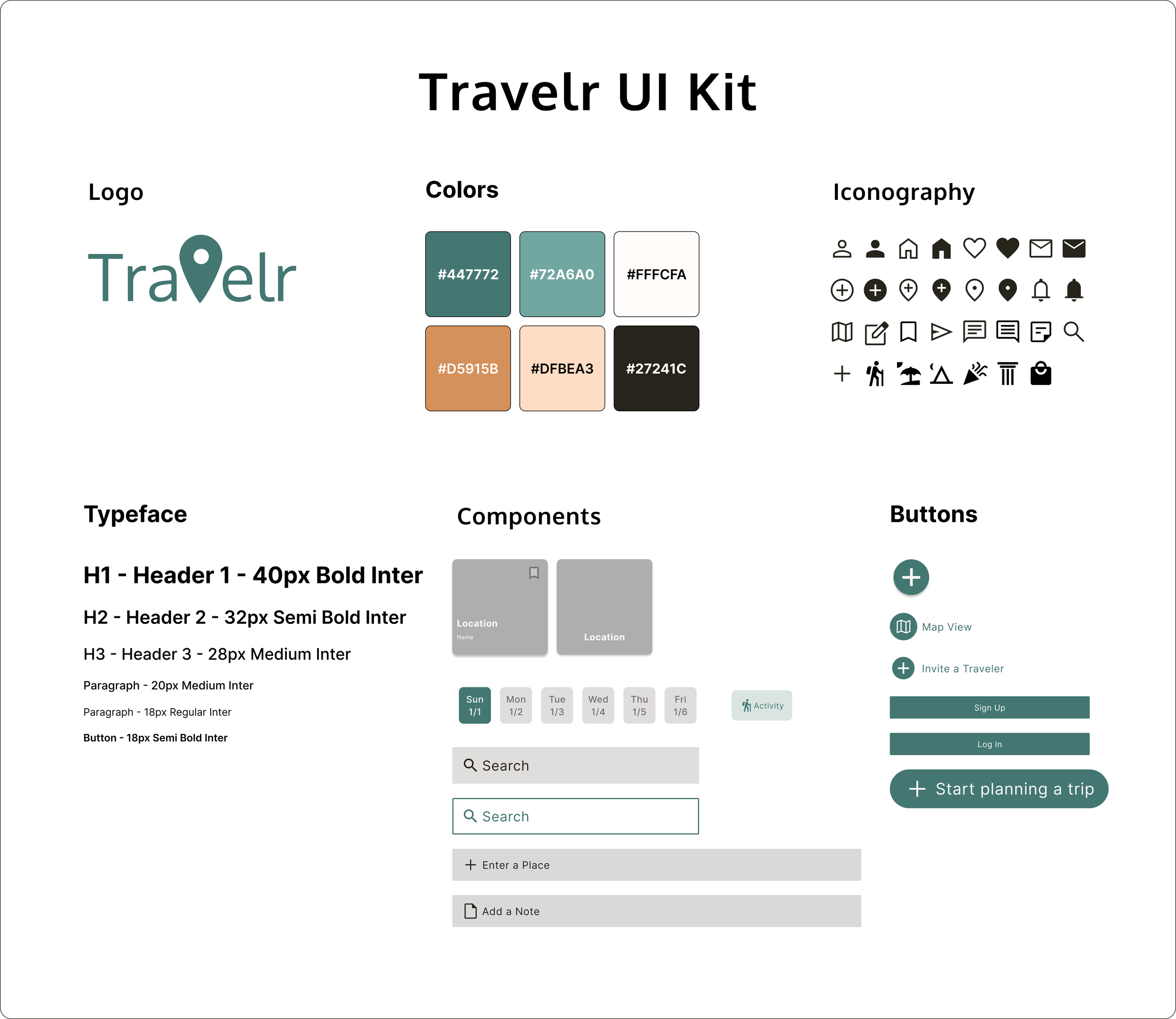
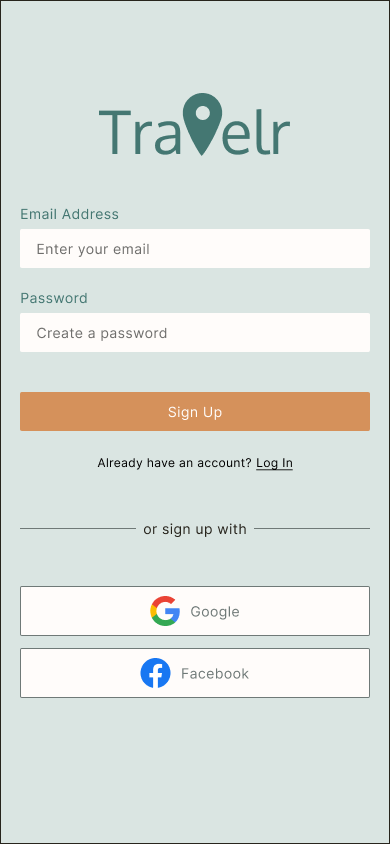
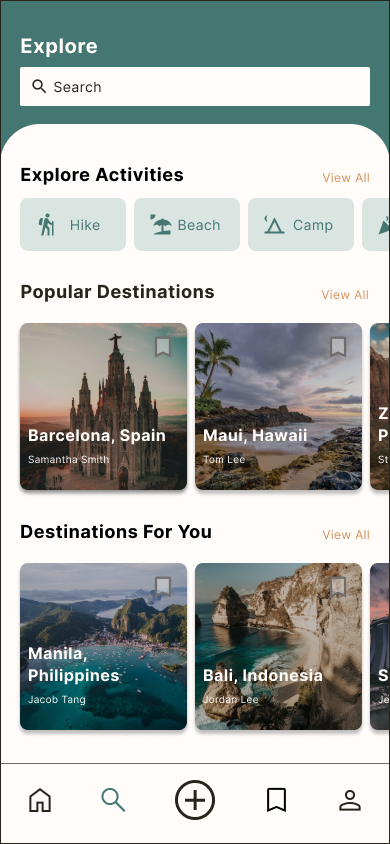
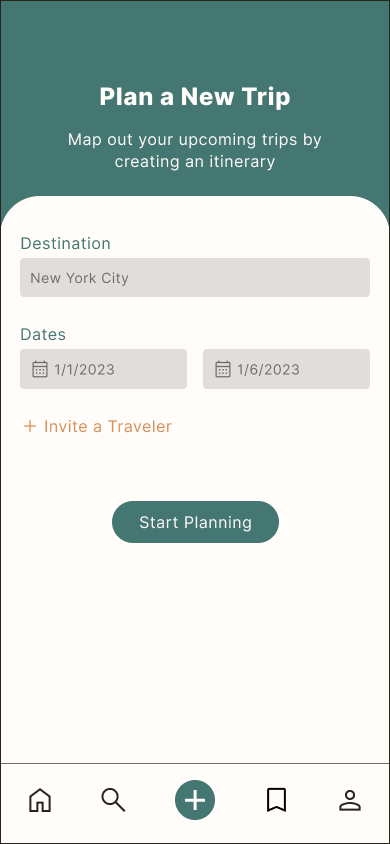
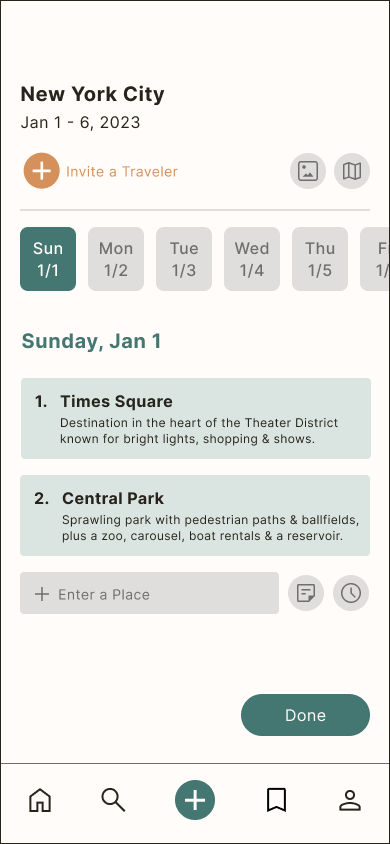
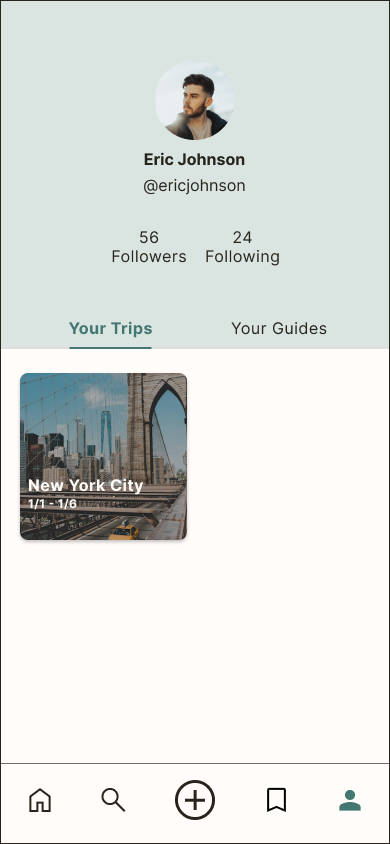
During the high-fidelity phase, I incorporated the UI kit to provide a representation of what the final product would look like. By using the UI kit, I was able to ensure that the design was cohesive and visually appealing, while also saving time on the design process. The high-fidelity wireframe was also interactive, allowing stakeholders to click through different pages and experience the app's functionality in a more realistic way.
High-Fidelity Wireframe
Sign Up Page
Log In Page
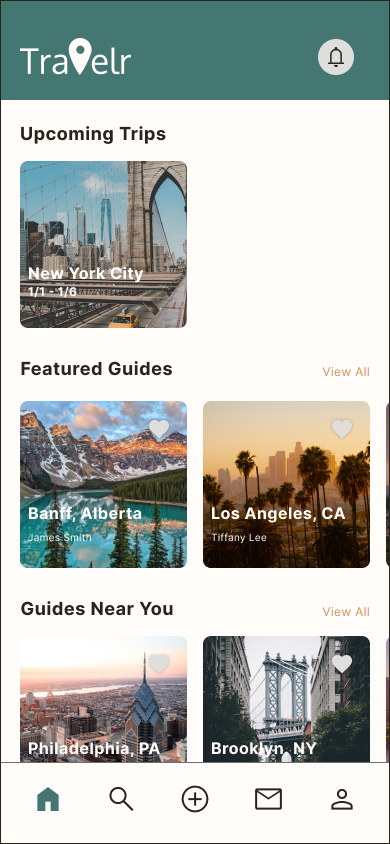
Home Page (Empty State)
Home Page
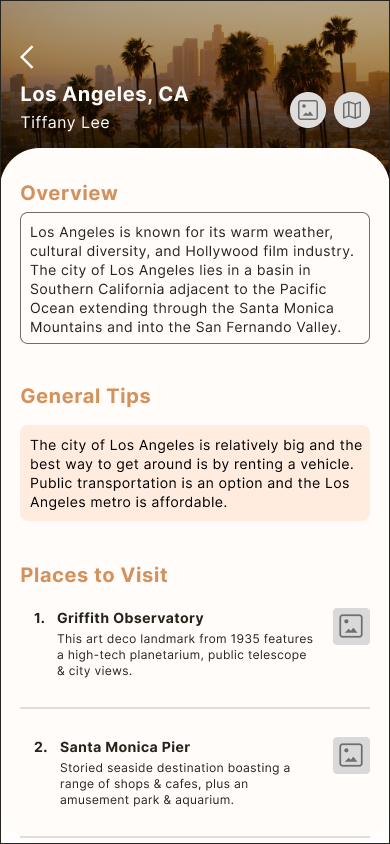
Travel Guide Page
Explore Page
Create Itinerary Page
Itinerary Page
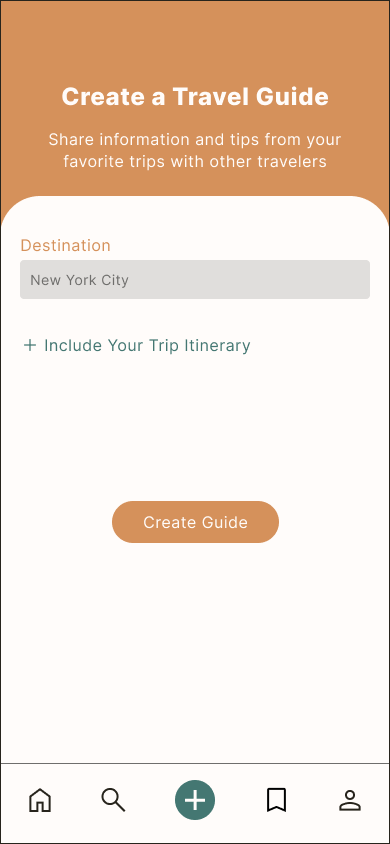
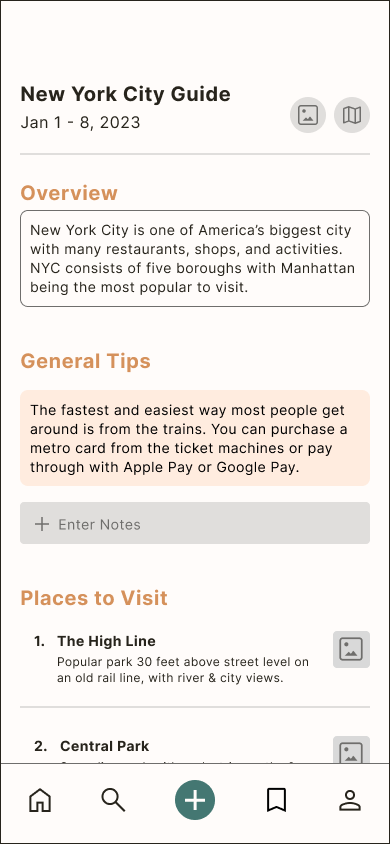
Create Travel Guide Page
Profile Page
Travel Guide Page
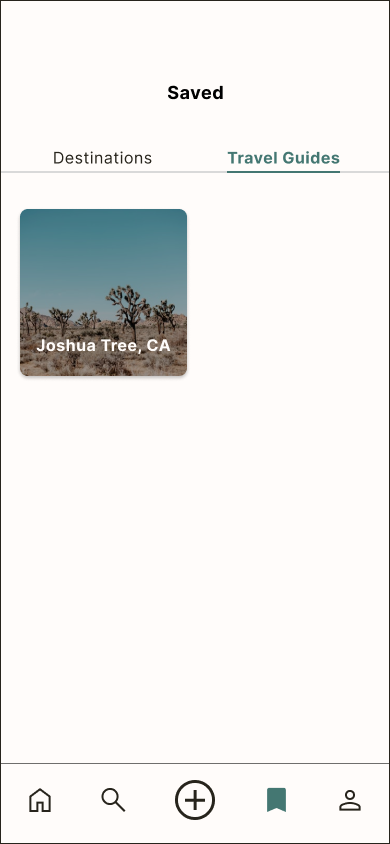
Saved Page

I have conducted 5 usability tests with potential users for the platform. I have asked participants to complete 4 of the following tasks:
Usability Testing
Log into your account
Create your first trip itinerary
Create your first travel guide
Explore the search page and save a travel guide
Results
Although it took some users longer than other to complete each task, there was a 100% completion rate.
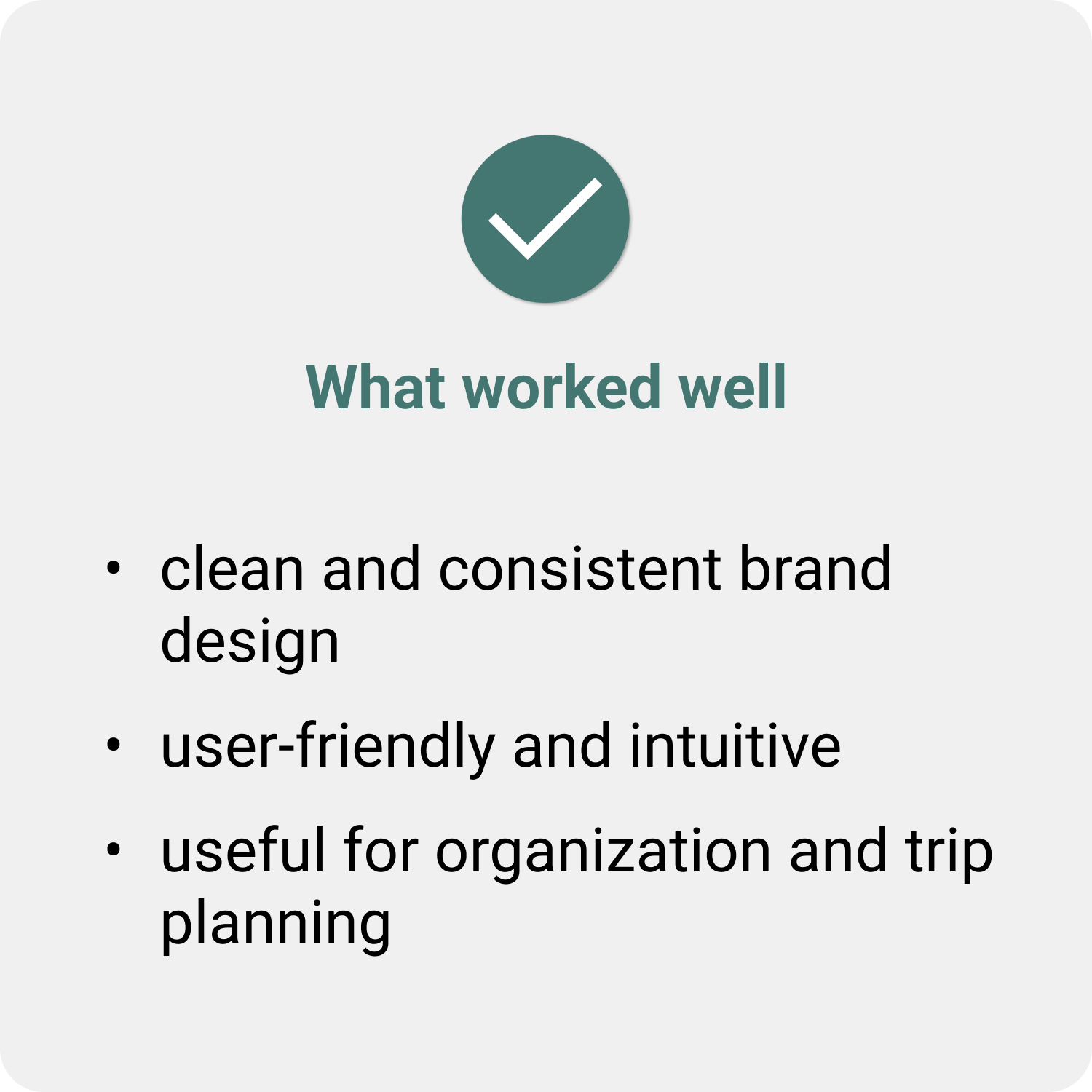
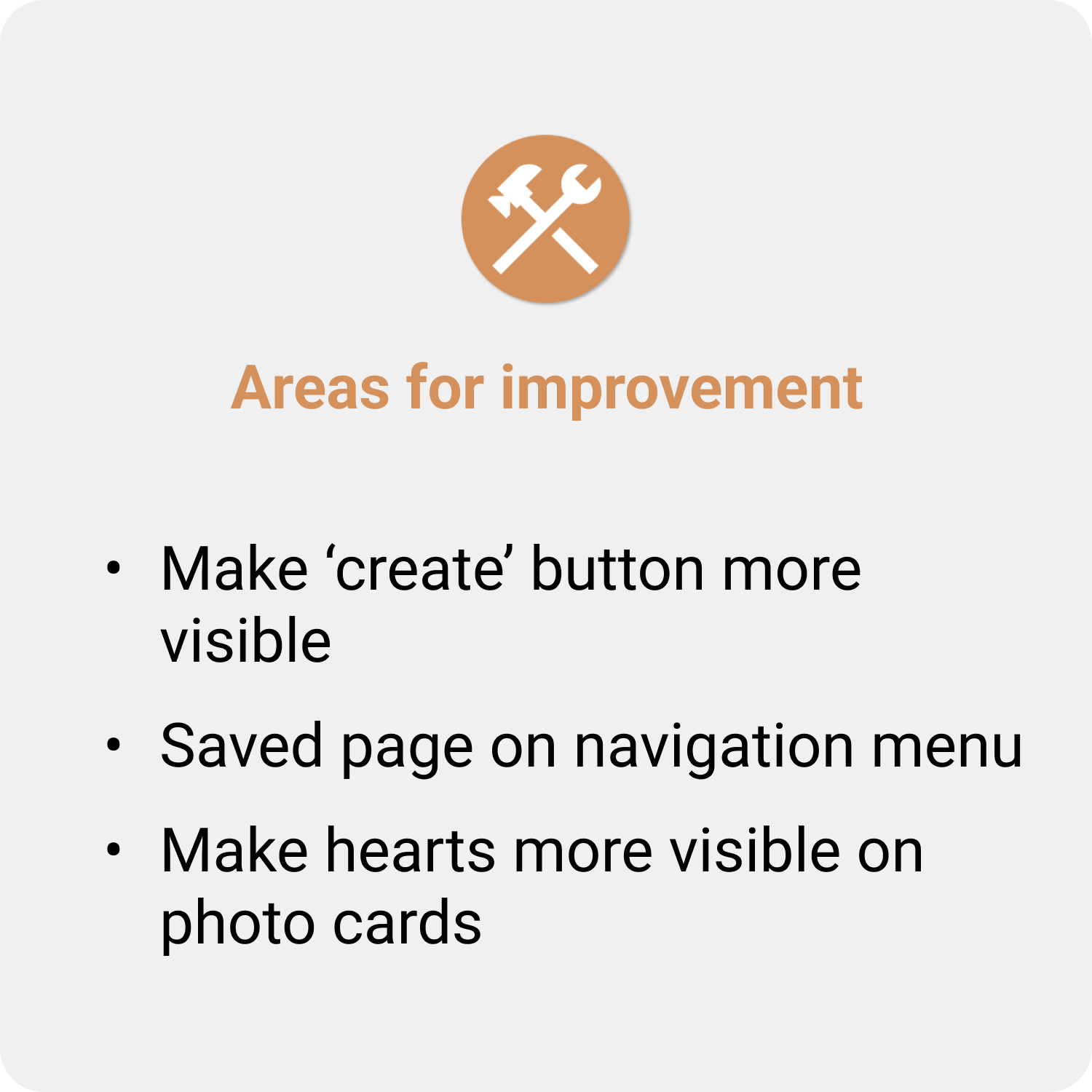
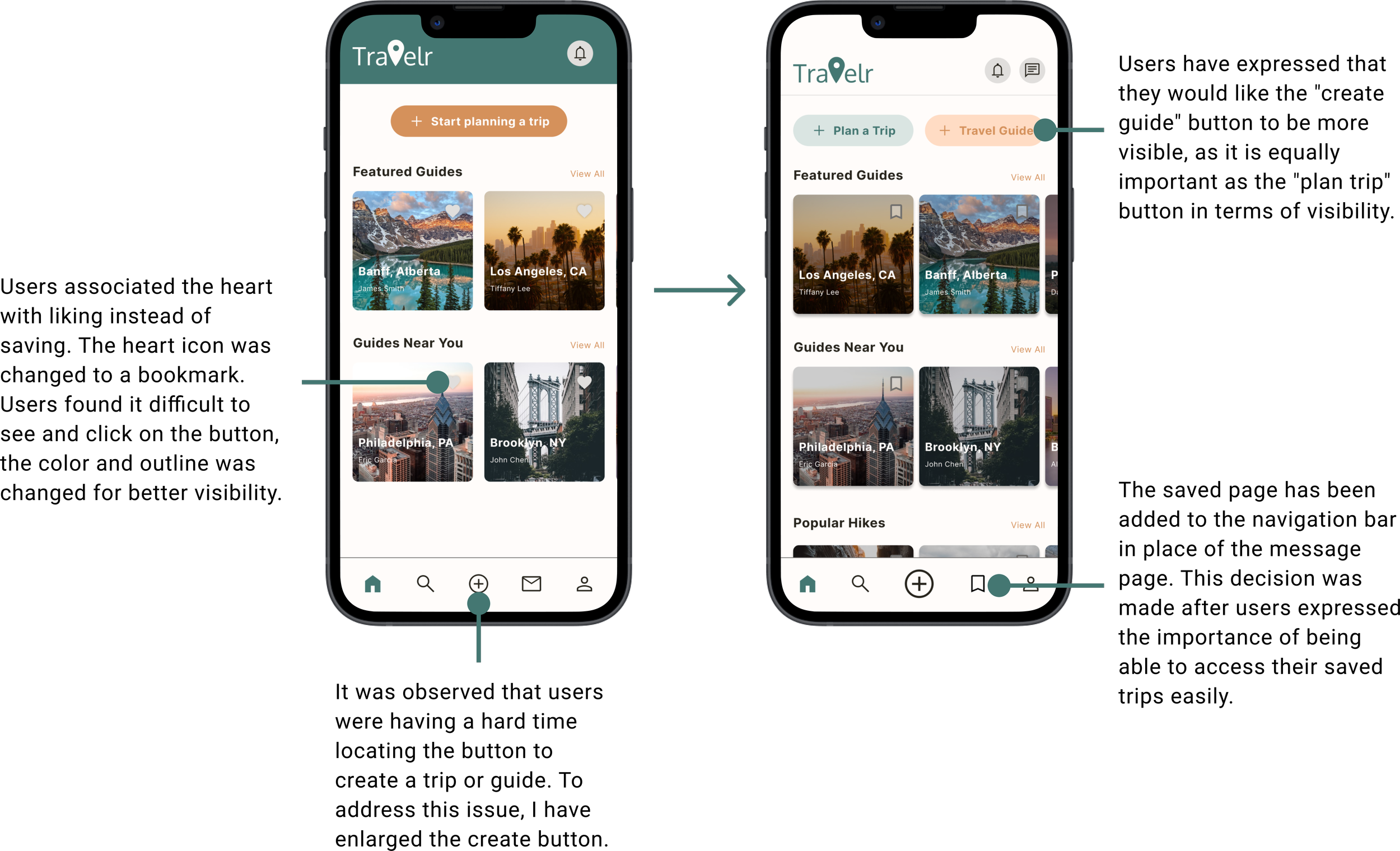
After conducting a usability test, we received feedback from users regarding issues they faced while navigating through the application and made several iterations to our prototype to solve those issues.
Iterations
As a designer, it's easy to get carried away with adding more and more features to the app, often making it feel like there will never be an end to the design process. However, it is important to understand what features are essential for travelers and focus on providing those. Everyone has different intentions and interests when traveling. I would need to conduct more user interviews to gain more insight on what features should be added to make the app usable among a wider audience.
I will continue to apply design thinking process by prototyping on new ideas and conduct multiple rounds of usability tests to observe how real travelers are interacting with the platform.